
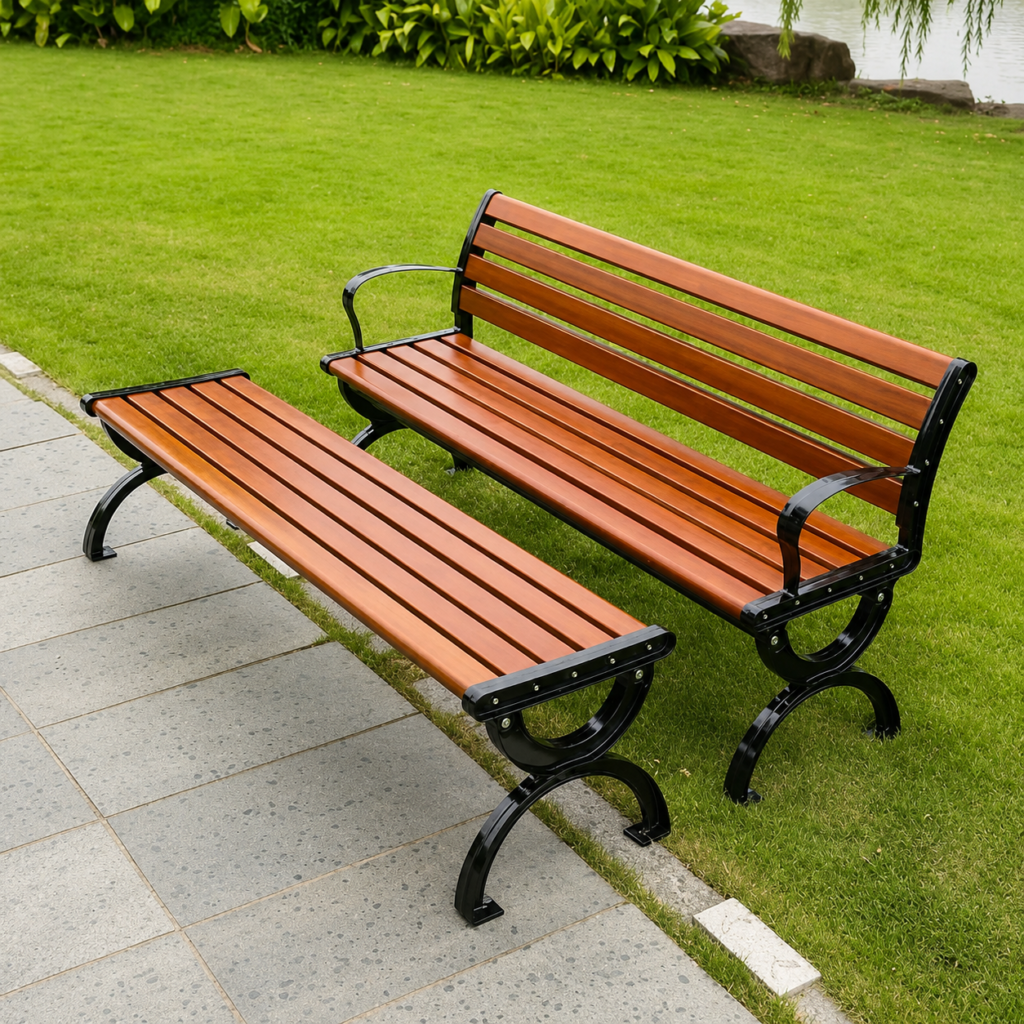
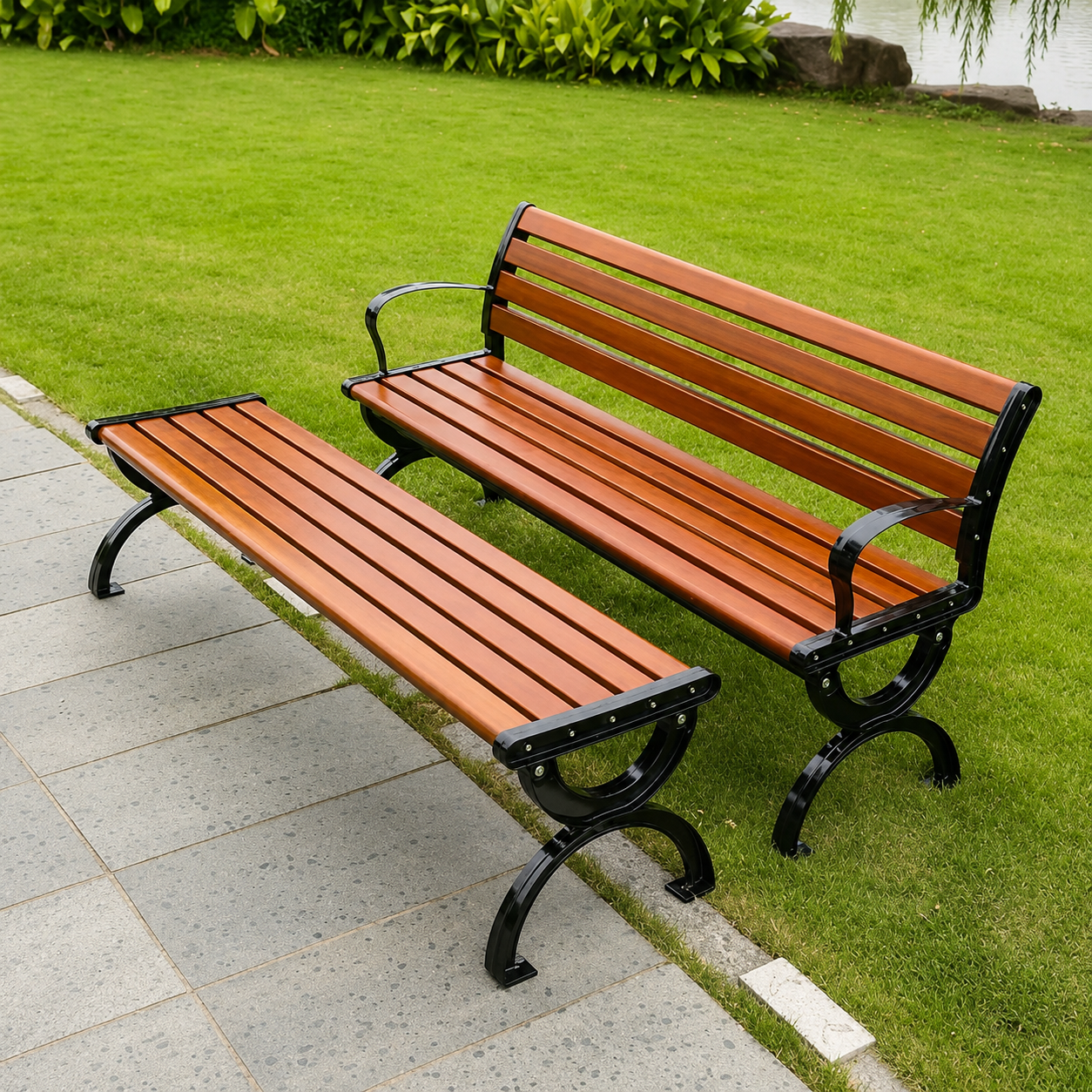
Steel and aluminum are both practical materials for outdoor furniture, but they solve different project problems. Steel is often selected when buyers need substantial weight, rigidity and impact resistance. Aluminum is often preferred when lower weight, easier handling and inherent corrosion resistance matter more. The best choice is therefore not a universal winner; it is the material-and-finish system that suits the location, product design, installation method and maintenance plan.
This guide compares steel vs aluminum outdoor furniture for municipal parks, campuses, commercial plazas, transit areas and other public spaces. It is written for project buyers who need to evaluate quotations, drawings and samples rather than select furniture only by appearance.
Quick Answer: Which Material Should You Choose?
Choose steel when the project prioritizes a solid structure, resistance to movement and a wide range of fabrication options. Choose aluminum when the installation team needs a lighter product or the environment makes corrosion management a central concern. In either case, do not approve a quotation until the supplier identifies the base material, section or wall thickness, surface treatment, joint design, fasteners and anchoring method.
For a complete product overview, start with the park and outdoor furniture collection. The collection connects material decisions with benches, tables, planters, bins and other public-space products.
Steel vs Aluminum Outdoor Furniture Comparison
| Decision Factor | Steel | Aluminum | Buyer Check |
|---|---|---|---|
| Weight and stability | Usually heavier and useful where furniture should feel fixed and substantial. | Usually lighter and easier to carry or reposition. | Confirm whether the unit will be surface-mounted, embedded or movable. |
| Structural behavior | Commonly used for rigid frames and heavy-duty public furniture. | Can provide a good strength-to-weight balance when sections and reinforcement are correctly designed. | Review drawings, member sizes, supports and connection points. |
| Corrosion management | Relies strongly on pre-treatment, coating coverage and protection of cut edges and welds. | Forms a protective oxide layer, but finish selection and dissimilar-metal contact still require attention. | State the climate, distance from salt exposure and cleaning routine. |
| Fabrication | Supports many welded and formed structures. | Requires fabrication methods appropriate to the selected alloy and section. | Ask the supplier to confirm the material and production route used for the offered design. |
| Handling | May require more people or lifting support for large units. | Can simplify delivery to roofs, courtyards or sites with restricted access. | Check package size, unit weight and the route from unloading point to final location. |
| Maintenance | Inspect damaged coating, joints, ground contact and areas where water can collect. | Inspect finish wear, dents, fasteners and contact between different metals. | Agree on cleaning, inspection and touch-up instructions before shipment. |
When Steel Outdoor Furniture Is the Better Fit
Strength, Rigidity and a Substantial Feel
Steel is a logical starting point for benches, litter bins, bollards, shelter components and other furniture expected to remain stable under frequent public use. Its weight can be an advantage in open plazas and streetscapes where loose or easily moved furniture would create operational problems. That weight does not replace anchoring, however. The final fixing method still needs to match the paving, concrete base or embedded foundation.
Flexible Fabrication for Coordinated Product Families
Public-space programs often need several products to share the same visual language. Steel frames, panels and formed components can be developed across seating, waste units and planters. Buyers should compare more than the finish color: frame proportions, panel patterns, edge details, fastener visibility and maintenance access determine whether the product family looks coordinated after installation.
Coating and Repair Planning
Outdoor steel should be specified as a complete protection system, not simply as “powder coated steel.” The quotation should identify surface preparation, any zinc-based or galvanized layer when applicable, primer if used, final coating and treatment of welds, holes and cut edges. The appropriate process depends on the project environment and the selected steel components. See the materials and surface treatment guide for the questions to include in an RFQ.
When Aluminum Outdoor Furniture Is the Better Fit
Lower Weight for Access-Limited Sites
Aluminum can reduce the handling burden for furniture installed on campuses, terraces, courtyards and sites reached through narrow access routes. This can also help when a design is intentionally movable. Buyers should still distinguish between movable furniture and furniture that merely happens to be light. Public products may require discreet anchors or other controls even when the frame material is aluminum.
Corrosion Resistance in Wet or Humid Conditions
Aluminum is often considered for humid or coastal environments because it does not rust in the same way as carbon steel. That does not make every aluminum product maintenance-free. Finish quality, drainage, alloy selection, exposure to salts and contact with other metals all influence service conditions. Ask how fasteners and mixed-metal joints are isolated and how scratches should be maintained.
Section Design Matters More Than the Material Name
A lightweight frame can perform well when the sections, internal reinforcement and support spacing are suitable for the product. Conversely, an aluminum label alone does not prove that a bench or table is appropriate for heavy public use. Request cross-section information, structural drawings and a sample or prototype review for custom designs.
How Climate and Site Exposure Change the Decision
Inland Parks and Urban Streets
In many inland projects, either steel or aluminum can work. The decision may depend more on the required weight, design geometry, budget structure, coating repair plan and local maintenance capability. Areas near irrigation, soil or persistent shade deserve extra attention because moisture can remain around feet, anchors and lower panels.
Coastal and High-Humidity Locations
Salt-bearing air, frequent condensation and wind-driven moisture increase the importance of material compatibility and finish details. Aluminum may reduce the risk associated with red rust, while protected steel can still be considered when the full corrosion-control system is appropriate. Avoid relying on a generic “outdoor grade” description; tell the supplier about the actual exposure and cleaning conditions.
Cold, Hot and High-UV Environments
Temperature cycles affect coatings, sealants, plastic inserts and connections as well as the metal frame. Strong sunlight can also change the appearance of some colors and surface materials over time. Confirm that the proposed finish and accessory materials are intended for the stated environment. For seating, consider whether dark metal surfaces will become uncomfortable in direct sun and whether shade or alternative contact surfaces are needed.
Design Details That Often Decide Long-Term Performance
Wall Thickness and Internal Reinforcement
Material grade is only one part of a structure. Tube size, wall thickness, plate thickness, span, support spacing and reinforcement influence stiffness and resistance to deformation. These values should come from the actual offered drawing; they should not be copied from a generic product description.
Welds, Mechanical Joints and Replaceable Parts
Review whether joints can trap water and whether frequently damaged components can be replaced without removing the entire unit. Concealed fixings may improve appearance, while accessible fixings may simplify maintenance. The right balance depends on vandal resistance, tool access and the operator’s maintenance process.
Fasteners and Mixed-Metal Contact
Fasteners should be selected for the environment and the metals they connect. When aluminum touches a different metal in the presence of moisture, the joint design may need isolation to reduce galvanic interaction. Ask the supplier to identify the fastener material, protective measures and replacement procedure.
Drainage, Edges and Ground Contact
Closed sections and flat surfaces need drainage planning. Water should not remain inside frames, around anchor plates or beneath decorative covers. Smooth edges and protected corners also support public safety and coating continuity. Check these details on drawings and samples, especially at welds, feet and openings.
Installation and Anchoring Considerations
Furniture performance depends on the relationship between the product and the site. Before production, identify the paving build-up, concrete base, underground services, slope and available edge distances. Ask for anchor-hole dimensions and a base-plate drawing early enough for the civil works team to coordinate.
A heavy steel bench is not automatically secure, and a light aluminum bench is not automatically unsuitable. Both can be designed for surface mounting, embedded installation or controlled mobility. The procurement document should say which condition applies to each product and who supplies the anchors.
Compare Lifecycle Cost, Not Material Price Alone
The lowest initial quotation may not be the lowest-cost solution over the project life. Compare the product price together with shipping, lifting, site access, anchoring, inspection, cleaning, coating touch-up and replacement of damaged parts. Steel can provide value where its structure and weight match the operating need. Aluminum can provide value where corrosion exposure or handling cost is more significant.
| Cost Area | Questions for the Supplier | Questions for the Project Team |
|---|---|---|
| Purchase | What material, finish, accessories and packing are included? | Are all bids based on the same scope and drawings? |
| Delivery | What are the packed dimensions and handling points? | Can the site receive and move each package safely? |
| Installation | Are anchors, templates and instructions included? | Is the base ready, level and coordinated with services? |
| Maintenance | What cleaning, inspection and touch-up guidance is provided? | Who will inspect the furniture and record damage? |
| Replacement | Which panels, slats, feet or fasteners are replaceable? | Will spare parts and finish references be retained? |
Procurement Checklist for Steel or Aluminum Furniture
- Project location, climate, salt or irrigation exposure and expected public use
- Product dimensions, quantity, layout and required visual coordination
- Base material, section sizes, wall or plate thickness and reinforcement
- Surface preparation, coating or other finish, color and texture
- Weld, joint, drainage, fastener and mixed-metal isolation details
- Anchoring method, foundation condition and installation responsibility
- Package dimensions, unloading method and access to the final location
- Cleaning, inspection, touch-up and replaceable-part instructions
For project-specific products, review the custom project process before requesting a quotation. Supplying location, quantities, drawings and reference images at the beginning helps the manufacturer return a more comparable proposal.
Related Product Options
Material decisions are easier when they are linked to a real product type. Compare custom metal outdoor benches for seating layouts and custom metal outdoor trash bins for coordinated waste stations. Municipal buyers can also review the municipal outdoor furniture solution to plan a consistent family of benches, bins, tables and planters.
Frequently Asked Questions
Is aluminum always better than steel for outdoor furniture?
No. Aluminum offers useful corrosion and weight advantages, but steel may be a better fit where rigidity, substantial weight and heavy-duty fabrication are priorities. Compare the complete product design and finish rather than the metal name alone.
Does powder coating make steel completely rust-proof?
No finish should be treated as an absolute guarantee. Surface preparation, coating coverage, edge and weld treatment, installation exposure and maintenance all influence performance. Damaged areas should be inspected and repaired according to the agreed maintenance guidance.
Which material is more suitable for coastal public spaces?
Aluminum is frequently considered because it does not form red rust like carbon steel. Properly protected steel may also be evaluated. The final decision should reflect salt exposure, drainage, finish system, mixed-metal joints and the maintenance plan.
Can steel and aluminum be used in the same outdoor product?
Yes, hybrid designs are possible. The connection method must account for different material behavior and the possibility of galvanic interaction where dissimilar metals meet in wet conditions. Ask for the joint and isolation detail.
Which material is easier to install?
Aluminum units are generally easier to handle because they are lighter, but site access, product size, packaging and anchoring determine the actual installation effort. Request the unit weight and installation drawing before delivery.
What information should be included in an RFQ?
Include the project location, product type, quantity, dimensions, layout, preferred materials, finish, colors, installation surface, anchoring condition, packing needs and target schedule. If the material is not yet decided, ask for clearly identified steel and aluminum alternatives rather than incomparable quotations.
Need help matching the material and product family to a public-space project? Send Yubang Outdoor your requirements for a configuration discussion.
