
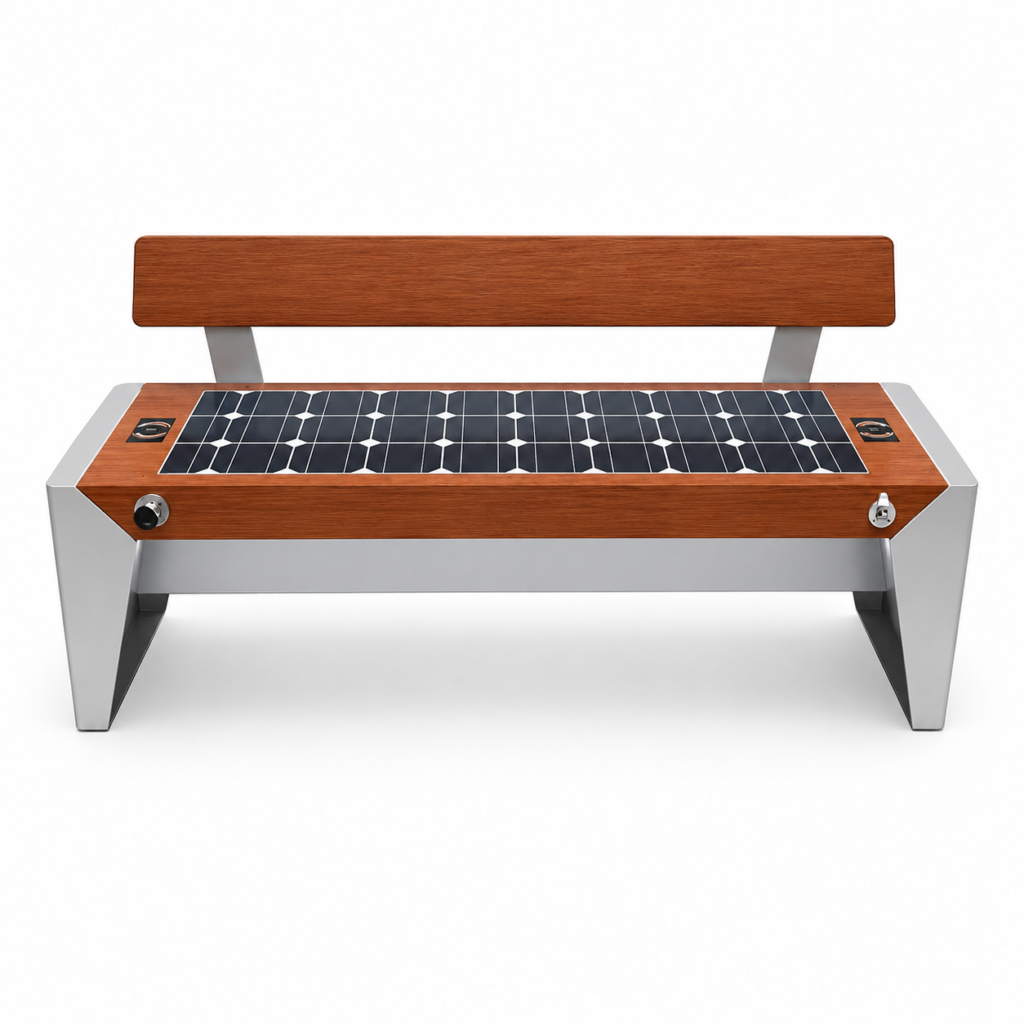
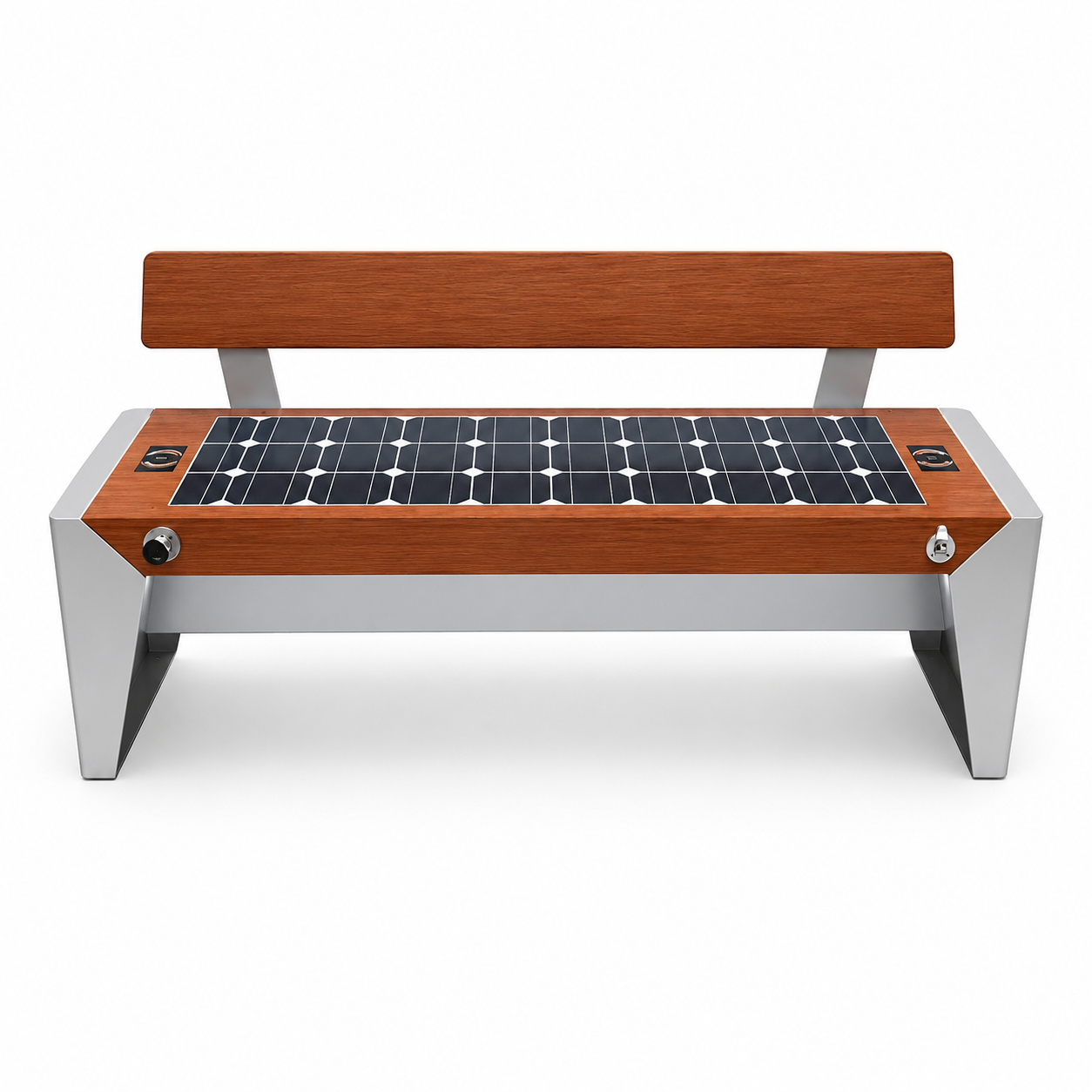
The first question many buyers ask is simple: What is the price of a solar bench? The accurate answer requires more detail because two benches that look similar can contain very different structures, batteries, charging modules and control systems.
A useful solar bench quotation should be based on project conditions and a defined specification. Comparing only the unit price can hide differences in durability, power availability, installation scope, shipping, replacement access and lifecycle cost.
This guide explains the main solar bench cost drivers and the information buyers should provide to receive comparable quotations.
Why Solar Bench Prices Vary
A conventional bench is mainly a structural and finishing product. A solar bench adds a photovoltaic system, energy storage, electrical controls, outdoor charging interfaces and optional smart functions. Each layer creates configuration choices.
The final price normally reflects:
- bench size and structural material;
- solar panel type and rated power;
- battery chemistry and capacity;
- controller and power-conversion components;
- number and type of charging outputs;
- lighting, sensors, Wi-Fi or display functions;
- outdoor protection and anti-vandal details;
- finish, branding and custom design;
- quantity and production tooling;
- packaging, freight and destination;
- installation hardware and site work;
- testing, documentation and spare parts.
For this reason, “solar bench price” should always be connected to a technical configuration.
1. Structure and Seating Materials
The body carries users and protects the electrical equipment. Common structures include powder-coated steel, stainless steel and aluminum, sometimes combined with timber or wood-plastic composite seating surfaces.
Cost is influenced by:
- material grade and thickness;
- structural reinforcement;
- welding and fabrication complexity;
- corrosion-resistance requirements;
- surface preparation and coating system;
- seating material;
- concealed access doors;
- tamper-resistant fasteners;
- and custom dimensions.
A coastal promenade, school campus and indoor transport concourse do not present the same exposure or abuse risk. Paying for the correct material and finish is usually more economical than repairing corrosion or coating failure later.
2. Solar Panel Size and Integration
The panel may be integrated into the bench or mounted on a raised structure. Panel power should be selected from local solar conditions and the electrical load.
A higher nominal panel rating may increase cost, but rated power alone does not guarantee better performance. Orientation, tilt, shade and the available mounting area affect generation. The U.S. Department of Energy identifies orientation, mounting and load requirements as linked elements of photovoltaic system design.
Custom panel integration may also affect engineering, packaging and wind-load considerations.
3. Battery Chemistry and Capacity
The battery is often one of the most important differences between quotations. Review:
- chemistry;
- rated voltage and capacity;
- usable operating range;
- expected cycle conditions;
- temperature requirements;
- protection and battery-management functions;
- enclosure location;
- and replacement access.
A larger battery generally costs more, but oversizing without sufficient solar input adds expense without solving a shaded-site problem. Battery sizing should follow an energy budget that includes charging, lighting and every optional load.
The quotation should clearly identify the supplied battery specification rather than using only a marketing phrase such as “large-capacity battery.”
4. Charging Configuration
Charging functions affect both component cost and system sizing.
Compare:
- number of USB-A ports;
- number and output of USB-C ports;
- wireless charging pads;
- total simultaneous output;
- protective covers and seals;
- replaceable module design;
- overload and short-circuit protection;
- and low-battery operating logic.
Higher-output USB-C or several simultaneous users can materially increase daily consumption. Read our solar bench charging station guide before finalizing these requirements.
5. Optional Smart Functions
Additional functions can include LED lighting, Wi-Fi equipment, environmental sensors, Bluetooth audio, equipment monitoring, digital displays and emergency-call modules.
Each feature may affect:
- hardware price;
- energy demand;
- battery and panel size;
- enclosure space;
- software or connectivity requirements;
- commissioning;
- and maintenance.
Select functions that serve a defined project need. Removing low-value features can reduce both initial cost and operating complexity.
6. Weather and Vandalism Protection
Public outdoor equipment requires more than an attractive shell. Cost can rise when the project requires:
- enhanced enclosure protection;
- coastal corrosion resistance;
- anti-graffiti finishes;
- concealed hinges;
- tamper-resistant fasteners;
- protected charging modules;
- impact-resistant covers;
- improved drainage;
- or locked maintenance compartments.
Ask which components the stated protection applies to. IEC 60529 defines the IP classification system for electrical enclosures, but a complete bench includes interfaces, seams and access points that must be evaluated as part of the actual product.
7. Custom Design and Branding
Standard colors and existing structures usually require less engineering than a new design. Custom work may include:
- project-specific dimensions;
- municipal colors;
- laser-cut logos;
- illuminated branding;
- custom armrests or dividers;
- integrated planters;
- unique panel supports;
- and matching street-furniture elements.
For large projects, customization can create a consistent identity. For a small trial order, using an existing platform with controlled changes is often more cost-efficient.
Use Real Samples to Define Solar Bench Options
A price request becomes more useful when the buyer can point to a preferred product form and explain what must change for the site. The following video shows real solar bench samples and prompts several practical decisions. It is visual reference material, not a universal specification. Dimensions, electrical components, materials and protection requirements still need to be confirmed for each order.
Translate a Preferred Look into Quotation Details
A reference image can show the intended character, but it does not define the price by itself. Buyers should convert the visual preference into written decisions about seating layout, structural material, finish, photovoltaic integration, charging interfaces, access panels, mounting and branding. This prevents one supplier from quoting a basic configuration while another includes functions that were never made explicit.
| Visible or functional choice | Information to add to the RFQ | Why it affects comparison |
|---|---|---|
| Bench shape and seating layout | Reference image, required overall size, seat count and accessibility needs | Changes fabrication, material use, tooling and packing volume |
| Integrated or raised solar panel | Preferred form plus site shade, orientation and expected electrical loads | Changes structure, generation assumptions and installation method |
| Charging interfaces | USB-A, USB-C, wireless charging and expected simultaneous use | Changes modules, controls, battery sizing and service access |
| Finish and branding | Color reference, logo method and exposure environment | Changes surface preparation, production steps and approval work |
| Installation and delivery | Foundation approach, destination, assembly state and unloading limits | Changes hardware, documentation, package design and freight basis |
Ask for an Included-and-Excluded List
Every quotation should state what is included and what remains the buyer’s responsibility. Ask whether the price covers anchors, foundation drawings, spare charging modules, commissioning support, packaging, freight and local installation. A clear exclusion list is often more useful than a short product description because it exposes scope differences before purchase.
For technical checks, use the solar bench specification checklist. You can also compare available configurations on the custom solar smart bench product page and review the public-space installation guide before requesting a project quotation.
8. Quantity and Production Scale
The cost per unit can change with quantity because engineering, setup, packaging design and documentation are distributed across the order.
When requesting pricing, specify whether the requirement is:
- one evaluation unit;
- a pilot deployment;
- one project batch;
- or a multi-stage program.
If future quantities are likely, ask the supplier to separate prototype or setup charges from repeat-order pricing.
9. Packaging and Freight
Solar benches can be heavy and bulky. Freight depends on packed dimensions, weight, destination, shipping mode and whether the product is delivered assembled or partly disassembled.
Compare quotations on the same commercial basis. Confirm:
- included packaging;
- shipping term;
- destination port or address;
- container-loading method;
- insurance responsibility;
- import duties and taxes;
- unloading equipment;
- and delivery to the final site.
A low factory price can become expensive if packing volume or local handling has not been considered.
10. Foundation and Installation Cost
The bench price may not include civil work or local installation. Site costs can include:
- survey and layout;
- concrete base or foundation;
- anchor bolts;
- lifting equipment;
- surface reinstatement;
- drainage work;
- local permits;
- commissioning;
- and accessibility adjustments.
Off-grid operation may avoid some electrical trenching, but it does not remove the need for a secure foundation and safe site design.
Purchase Price vs Lifecycle Cost
The lowest purchase price is not always the lowest project cost. A lifecycle comparison should consider:
- cleaning and inspection labor;
- replacement charging modules;
- battery replacement;
- coating repair;
- vandalism damage;
- spare-parts availability;
- disassembly time;
- downtime;
- and supplier documentation.
A serviceable design can reduce the labor required to replace a charging port or battery. This is particularly important for municipal buyers managing many units across different sites.
What Information Is Needed for an Accurate Solar Bench Quotation?
Send the supplier:
- Installation city and exact environment.
- Site photographs or layout drawings.
- Expected shade and hours of useful sunlight.
- Required quantity and schedule.
- USB-A, USB-C and wireless charging requirements.
- Expected simultaneous users.
- Lighting, Wi-Fi, sensors or display functions.
- Preferred material and finish.
- Required dimensions, color and branding.
- Foundation or mounting preference.
- Applicable protection, testing or documentation requirements.
- Shipping destination and requested trade term.
- Spare-parts and warranty expectations.
With this information, suppliers can quote comparable configurations instead of making assumptions.
How to Compare Two Quotations
Use a side-by-side comparison table:
| Item | Supplier A | Supplier B |
|---|---|---|
| Structural material and thickness | ||
| Finish and corrosion system | ||
| Panel rated power | ||
| Battery chemistry and capacity | ||
| USB-A / USB-C / wireless outputs | ||
| Total simultaneous charging output | ||
| Lighting and smart functions | ||
| Low-energy behavior | ||
| Enclosure and interface protection | ||
| Foundation hardware | ||
| Packaging and freight basis | ||
| Spare parts | ||
| Warranty scope |
If a line is blank, request clarification before treating one offer as cheaper.
Frequently Asked Questions
How much does a solar bench cost?
There is no reliable universal price because structure, battery, panel, charging output, smart functions, quantity, freight and installation vary. A project-specific quotation is the appropriate basis for budgeting.
Why are two similar-looking benches priced differently?
Internal battery capacity, material grade, charging modules, controller, weather protection and service access may differ even when the exterior shape is similar.
Does the solar bench price include installation?
Not always. Confirm whether the quotation includes anchors, foundation drawings, civil work, unloading, installation and commissioning.
Is a larger battery always worth the cost?
No. Battery size should match the load and available solar generation. A shaded installation may require a location or system change rather than only a larger battery.
Can custom branding be included?
Yes. Color, logo, cutout patterns and other visual elements can usually be customized, subject to design review, quantity and production method.
What details should I send for a comparable solar bench quote?
Send the installation location, site images, expected shade, quantity, preferred style, charging functions, material and finish requirements, branding, foundation approach, destination and requested delivery term. Ask every supplier to price the same written scope and to list exclusions. Yubang Outdoor can review these inputs against its custom solar smart bench options, but final specifications should be confirmed in the approved quotation and drawings.
Get a Comparable Project Quotation
The most useful solar bench price is a transparent price connected to a complete specification. Define the site, expected users, charging outputs, smart functions, materials, quantity and delivery destination before comparing offers.
Use our solar bench buying guide to prepare the technical requirements. Yubang manufactures custom solar smart benches for public outdoor spaces. Send your site information, functions, quantity and destination for a configuration and quotation.
Suggested external references
- U.S. Department of Energy, Solar Photovoltaic System Design Basics: https://www.energy.gov/cmei/systems/solar-photovoltaic-system-design-basics
- IEC 60529, Degrees of protection provided by enclosures: https://webstore.iec.ch/en/publication/2452
