
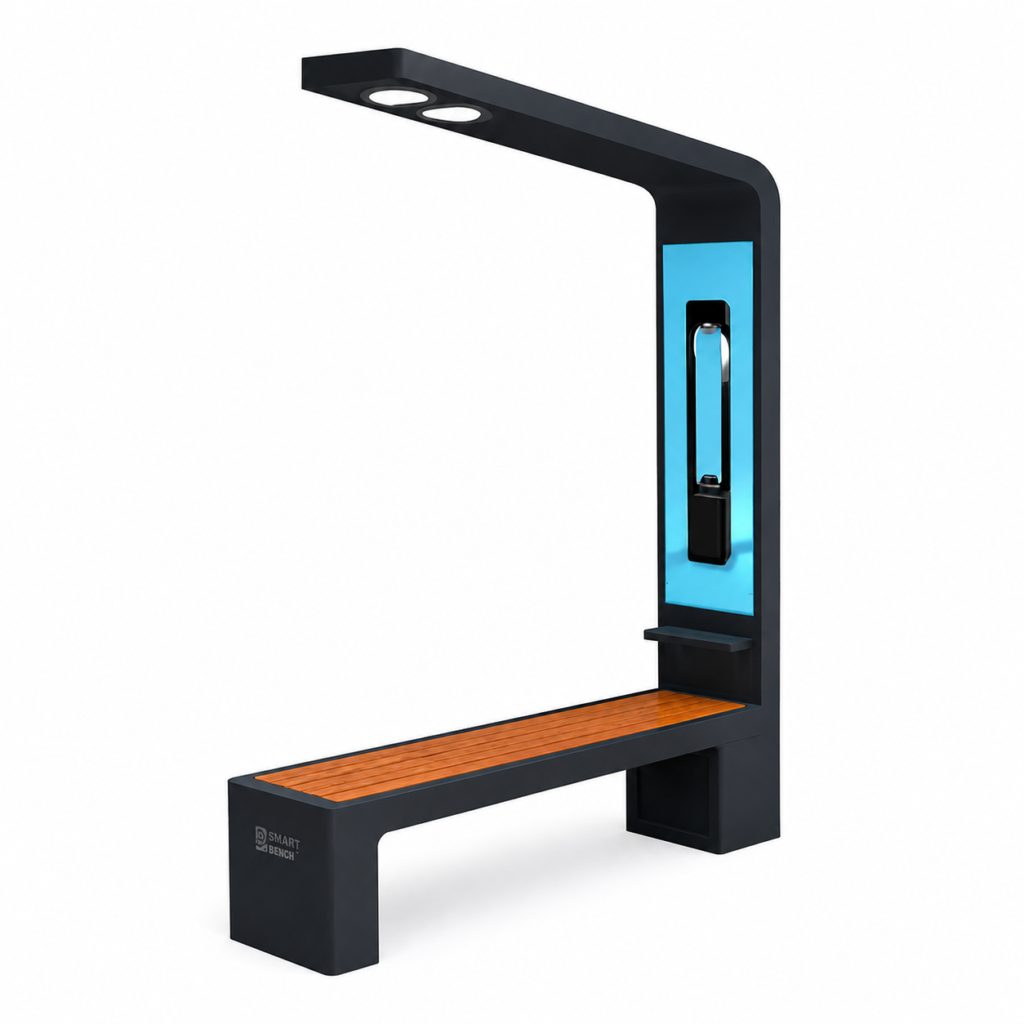
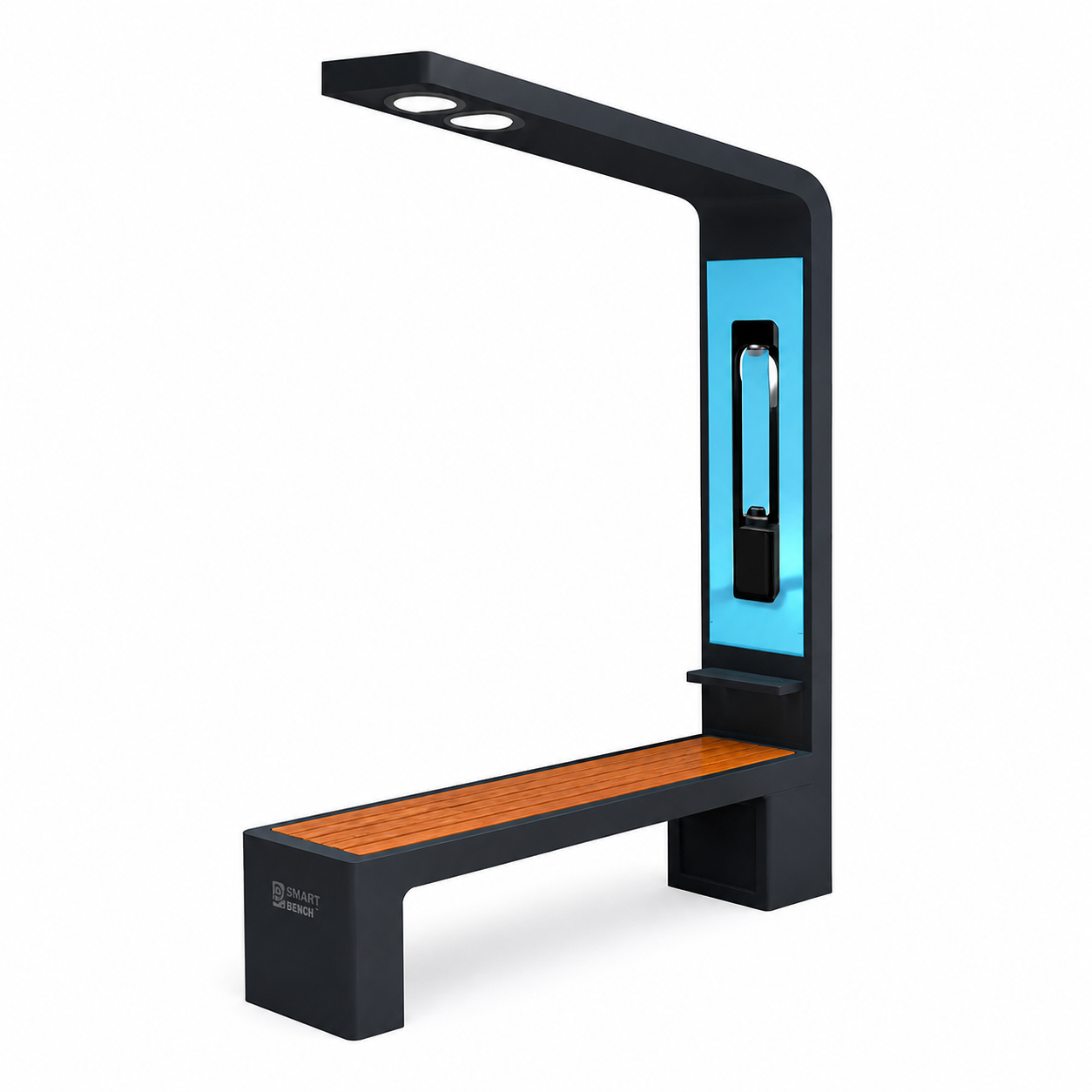
A solar bench can add seating, device charging and optional lighting to a school, park or campus without depending on a nearby grid connection. However, the visible bench is only one part of the purchase. The photovoltaic panel, battery, controller, charging outlets, enclosure, foundation and maintenance plan must work together for the intended location.
This solar bench buying guide helps landscape architects, school facility teams, park managers and procurement officers compare proposals on the same basis. It does not prescribe one universal configuration. Instead, it shows which project information to collect and which questions to include in an RFQ before a supplier recommends a model.
1. Start With the Site and User Need
Begin with the problem the bench must solve. A campus may need convenient daytime charging between classes. A public park may value evening orientation lighting and durable seating. A transport interchange may require continuous use, clear pedestrian circulation and simple service access. Listing the primary and secondary functions prevents unnecessary features from increasing complexity.
Schools and Education Campuses
For schools, prioritize safe public access, rounded or protected edges, controlled access to electrical compartments and a layout that does not obstruct supervised circulation. Estimate how many students may charge devices at the same time and when demand will peak. If the site is closed at night, a long lighting schedule may not be necessary.
Parks, Trails and Recreation Areas
Park equipment may face leaves, dust, rain, irrigation spray and long intervals between maintenance visits. Place the bench where it is useful without moving the solar panel into persistent tree shade. Check whether the seating surface, ports and access doors can be cleaned with the methods already used by the park team.
Corporate and Public Campuses
Corporate, hospital and civic campuses often need a design that coordinates with other street furniture. Ask whether colors, logos, signage or seating materials can be matched without blocking ventilation or maintenance access. Wi-Fi or monitoring functions should only be specified when the operator has a clear ownership and data-management plan.
2. Map Functions to Real Operating Conditions
A long feature list is not the same as a reliable specification. Each function adds an electrical load, a weather-exposed interface or a maintenance task. Use the table below to convert a desired feature into questions that can be answered and compared during procurement.
| Function | Information to Define | Buyer Check |
|---|---|---|
| USB or USB-C charging | Port quantity, connector type, expected simultaneous users and operating hours | Confirm protected outdoor outlets, replaceable modules and accessible labeling. |
| Wireless charging | Charging location, supported device behavior and surface material | Ask how the charging zone is identified and protected from standing water. |
| LED lighting | Purpose, operating schedule and control method | Separate safety lighting needs from decorative lighting preferences. |
| Wi-Fi or sensors | Network, data ownership, privacy and maintenance responsibility | Do not add connected modules without an operating plan. |
| Advertising or information panel | Panel dimensions, artwork access and replacement frequency | Keep signage clear of the solar panel and service doors. |
3. Evaluate Sunlight Before System Sizing
The same solar bench can perform differently at two locations because solar exposure, temperature and usage vary. Record the proposed orientation and shade from buildings, trees, canopies and seasonal vegetation. A brief site survey is more useful than assuming that an open-looking area receives adequate sunlight throughout the operating period.
Provide the project location and expected daily use to the supplier. The supplier can then recommend panel, battery and control-system options for review. Avoid requesting an arbitrary battery capacity before the load and sunlight assumptions are defined.
Ask for an Energy-Balance Explanation
A useful proposal should explain the relationship between expected solar generation, battery storage and the daily load. It should state which functions are included in the estimate and how the control system responds when energy is limited. This makes competing proposals easier to compare even when they use different components.
Plan for Shade and Seasonal Change
If a preferred seating location is shaded, discuss alternative orientations, a canopy-style panel or a different location before ordering. Do not assume that a larger battery alone solves continuous shade. For more detail, use the solar bench specifications checklist to organize panel, battery and controller questions.
4. Compare Charging Interfaces and Protection
Charging hardware is one of the most frequently handled parts of a smart bench. Ask whether individual ports or modules can be replaced without removing the complete bench. Protective covers, drainage, enclosure design and cable routing should suit outdoor public use. The appropriate solution depends on climate, cleaning practice and expected traffic.
USB-A, USB-C and wireless charging serve different device mixes. Specify the required interface but allow the supplier to confirm output and system compatibility. The solar bench charging station guide provides a focused comparison of these options.
5. Select the Structure and Seating Material
A solar bench remains a piece of outdoor furniture. Its frame, fasteners, seating surface and finish must suit public use and the local environment. Common proposals may use steel, stainless steel, aluminum or mixed materials. Instead of choosing by material name alone, compare corrosion exposure, surface treatment, repair method, cleaning requirements and visual compatibility with the project.
Check Enclosures and Service Doors
Electrical compartments should discourage unauthorized access while remaining serviceable for trained staff. Ask how panels open, which tools are needed, and whether the battery, controller and charging modules can be inspected without disturbing anchors or adjacent paving. Ventilation and drainage details should be included where relevant to the proposed design.
6. Plan Accessibility and Pedestrian Circulation
Locate the bench outside the clear pedestrian route and consider wheelchair companion space, approach direction and the reach range to charging points. A large solar canopy, side panel or projecting component can change the footprint beyond the seat itself. Review the complete product drawing, not just the front elevation.
Local accessibility and electrical requirements vary, so the project designer or authority should confirm compliance for the final location. The supplier can provide product dimensions, fixing details and component information, but site approval remains project-specific.
7. Confirm Foundation, Anchoring and Drainage
A level and stable base supports comfort, structural stability and correct alignment. Ask for the anchor pattern, foundation recommendations, finished surface level and required service clearance before construction is completed. Coordinate underground services and irrigation lines before drilling or excavation.
Water should drain away from the base and electrical access points. For a step-by-step planning sequence, refer to the solar bench installation guide.
8. Build Maintenance Into the Purchase
Routine work may include cleaning the solar surface, checking charging outlets, inspecting fasteners, reviewing enclosure seals and repairing damaged coatings. Ask who can access the electrical compartment, which parts are replaceable and what information will be supplied at handover.
Request Documentation and Spare-Part Information
The project file should include the approved drawing, wiring or connection information where applicable, installation instructions, operating guidance and a component list. Discuss recommended spare modules based on fleet size and location. A clear documentation package can reduce diagnosis time after installation.
Assign an Inspection Schedule
Inspection frequency should reflect use, climate and the operator’s maintenance program. A heavily used school courtyard may need more frequent visual checks than a controlled campus area. The solar bench maintenance guide can be adapted into a local checklist.
9. Compare Proposals With One Decision Matrix
Require every bidder to respond to the same site brief. This reduces the risk of comparing a basic bench with a proposal that includes additional charging, lighting or communication functions. Record exclusions and assumptions beside price rather than treating the total as a complete technical comparison.
| Decision Area | Evidence to Request | Common Risk if Omitted |
|---|---|---|
| Site suitability | Overall dimensions, orientation and shade assumptions | Low generation or blocked circulation |
| Electrical system | Function list, component description and energy assumptions | Unclear operating time or incomparable offers |
| Public-use protection | Port, enclosure and access-door details | Water exposure or unauthorized access |
| Installation | Anchor layout, foundation guidance and clearance | Site rework or delayed installation |
| Maintenance | Service method, replaceable parts and handover documents | Long downtime after a minor failure |
| Logistics | Packing method, delivery split and site handling needs | Damage or unsuitable lifting arrangements |
10. Solar Bench RFQ Checklist
- Project type, location and intended users
- Site photographs, layout and known shade conditions
- Required charging, lighting, signage or connected functions
- Expected simultaneous users and operating schedule
- Preferred appearance, materials and finish
- Overall space, accessible route and companion-space requirements
- Foundation condition and intended anchoring method
- Climate, irrigation, cleaning and corrosion exposure
- Required drawings, manuals and handover documents
- Quantity, delivery destination, packing needs and project schedule
- Maintenance responsibility and desired spare-part information
Send this information with your inquiry so the proposed configuration can be discussed against real project conditions. Buyers can review custom solar smart benches for public spaces or solar canopy bench options, then request a project-specific quotation.
Frequently Asked Questions
Can a solar bench work during cloudy weather?
Operation during cloudy periods depends on available solar energy, stored energy, system controls and actual load. Provide the location, shade conditions and required functions so the proposal can state its design assumptions. A universal operating-time claim is not reliable without this information.
Are solar benches suitable for schools?
They can be suitable when public-use safety, stable anchoring, protected electrical access, circulation and maintenance responsibility are addressed. The school should also decide which charging interfaces and operating hours are genuinely needed.
Do solar benches require grid wiring?
Many designs operate as standalone solar units, but the answer depends on the selected functions and project requirements. Some connected equipment may need a communications plan, and local rules may affect installation. Confirm the proposed configuration before preparing the site.
Where should a solar bench be installed?
Choose a useful seating location with suitable solar exposure, drainage, a stable base and clear pedestrian circulation. Check shade across the day and season, not only at the time of a site visit.
What information should be checked before shipment?
Review the approved drawings, finish, function test records or agreed inspection items, component access, packing protection, installation instructions and delivery marks. Confirm that fragile solar and electrical parts are protected for the planned transport route.
How should buyers compare solar bench prices?
Compare the included structure, energy system, charging modules, finish, documentation, packing and service scope on the same basis. A lower total may exclude functions or project support included elsewhere. The solar bench price factors guide explains the main cost drivers without relying on a one-size-fits-all price.
