
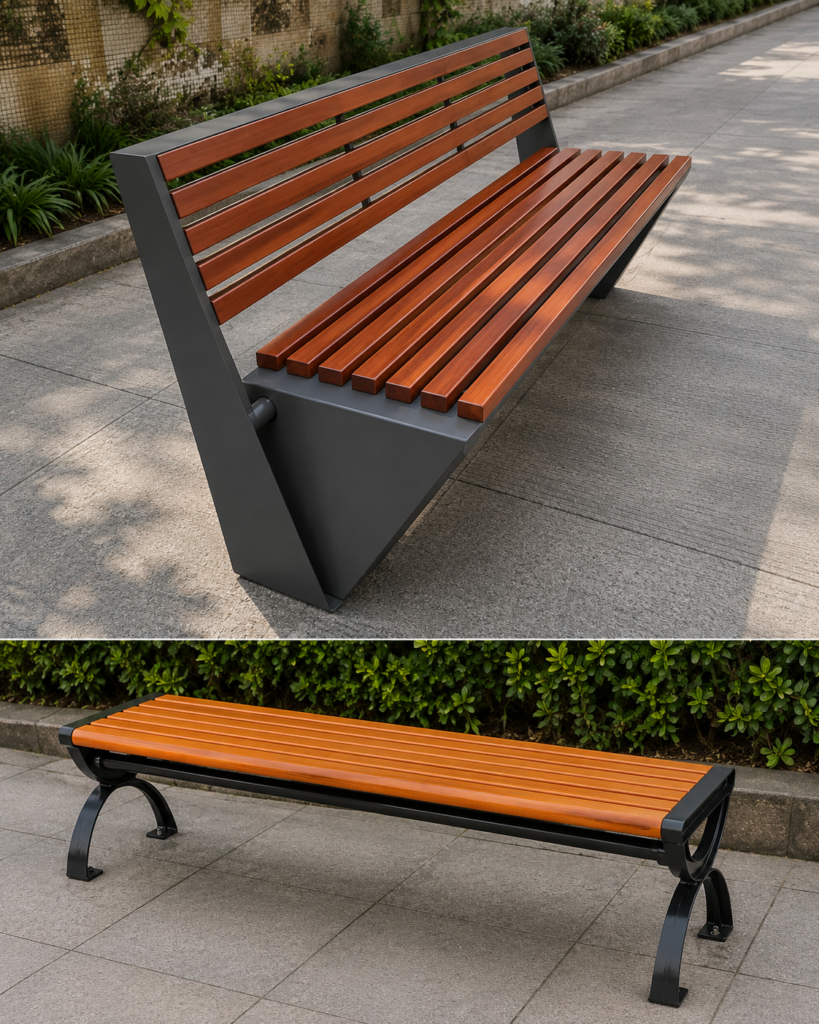
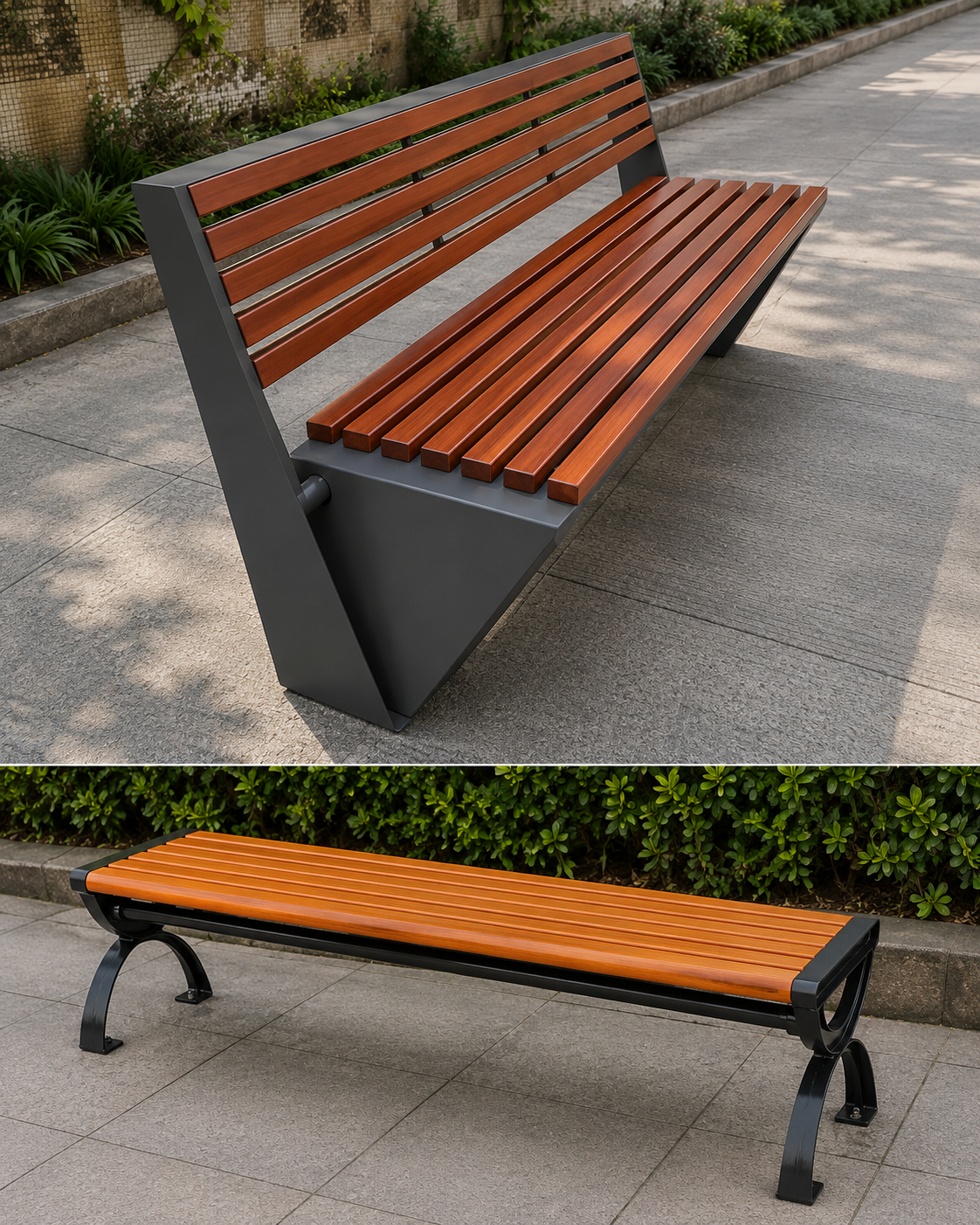
Outdoor benches for public parks are small assets with a long service life. A vague specification can create recurring problems: finishes fade too quickly, anchors do not match the paving, replacement slats are unavailable, or the selected layout interrupts pedestrian movement. Project buyers therefore need to evaluate the bench as part of the complete public-space system, not as a stand-alone piece of furniture.
This guide is written for municipal buyers, landscape contractors, developers, schools and public-space planners. It explains how to compare materials, layouts, installation details and supplier documentation without relying on unverified performance claims. The objective is a clearer request for quotation and a bench specification that can be reviewed by design, procurement, construction and maintenance teams.
Use a Project-Based Bench Selection Framework
A useful bench specification begins with the site and operating plan. Product appearance matters, but it should follow decisions about climate exposure, user groups, maintenance access, installation surfaces and procurement responsibilities. This sequence helps buyers avoid choosing an attractive model that cannot be installed or maintained efficiently.
Define the Installation Environment
Record whether the site is coastal, humid, dry, exposed to strong sunlight, shaded by trees or affected by winter de-icing materials. Also identify irrigation spray, standing water, soil contact and nearby vehicle emissions. These conditions influence material selection, drainage details, fasteners and surface preparation. A supplier cannot recommend a suitable finish when the RFQ only says “for outdoor use.”
Describe Users and Daily Activity
A quiet garden path, a school entrance and a busy commercial plaza place different demands on seating. Buyers should describe expected user turnover, luggage or shopping-bag use, supervision needs, eating areas and the possibility of skateboards or bicycles contacting the bench. This context helps determine whether the project needs backrests, armrests, divided seating, open space beside the bench or more robust edge details.
Challenges When Specifying Outdoor Benches for Plazas
Plaza projects often combine architecture, landscape, retail operations, signage and pedestrian circulation. The bench must support all of these functions while remaining easy to clean and repair. The most common challenge is not a lack of product choices. It is the lack of coordination between the bench, paving, planting, lighting and maintenance plan.
Balance Visual Consistency and Maintenance
Long bench lines and repeated modules can create a strong visual identity, but the design should still allow individual components to be replaced. Ask whether slats, armrests, end caps and fasteners are separate service parts. A design that requires replacement of the entire bench after local damage may increase disruption and material waste.
Coordinate Benches With Other Site Amenities
Benches should not compete with litter bins, planters, signs, lighting poles or emergency access routes. For a coordinated commercial project, review the bench together with the wider commercial plaza site amenity solution. Matching finishes and planned spacing can make procurement clearer while keeping pedestrian routes understandable.
Compare Outdoor Bench Materials by Project Need
No single material is best for every park. Buyers should compare corrosion exposure, weight, repair method, surface temperature, cleaning procedures and availability of replacement parts. The material name alone is not enough; grade, section design, pre-treatment, coating system and fastening method all affect the finished product.
| Material or Structure | Typical Project Fit | Points to Confirm in the RFQ |
|---|---|---|
| Powder-coated steel | Municipal parks, streetscapes and commercial public areas | Steel section, weld finishing, pre-treatment, coating system, drainage and touch-up process |
| Galvanized steel | Humid sites and projects seeking an added corrosion-control layer | Galvanizing method, vent and drain details, final coating compatibility and repair method |
| Aluminum | Coastal settings, movable layouts and projects that benefit from lower component weight | Alloy and section design, isolation from dissimilar metals, anchoring and finish |
| Stainless steel components | Fasteners, supports or details exposed to frequent cleaning and moisture | Grade, finish direction, weld treatment and compatibility with adjacent materials |
| Timber or composite slats | Parks seeking a warmer visual and tactile character | Moisture movement, UV exposure, cleaning method, fixing details and replacement availability |
When Powder-Coated Steel Makes Sense
Steel is widely used because it supports varied forms and can be fabricated for repeatable project quantities. The RFQ should describe more than color. It should identify the required substrate preparation, primer or pre-treatment, topcoat system, finish reference and inspection expectations. Welds, cut edges and drainage openings deserve the same attention as visible flat surfaces.
When Aluminum or Stainless Components Help
Aluminum can reduce component weight and provides a different corrosion profile from carbon steel, although correct section design and anchoring remain important. Stainless steel is often useful for fasteners and selected exposed parts. Dissimilar metals should be reviewed together because direct contact in wet conditions can create corrosion concerns. Ask the supplier how materials are isolated and how replacement hardware will be identified.
How to Review Timber and Composite Slats
Slatted seating can improve comfort and give a park a less industrial character. Buyers should ask how the slats respond to moisture, sunlight, cleaning chemicals and repeated fastening. Samples are valuable for reviewing color, texture and edge treatment. It is also practical to confirm whether individual slats can be reordered later using a drawing number or part reference.
For a broader comparison, see the outdoor furniture materials guide and the focused review of steel versus aluminum outdoor furniture.
Plan Comfort and Inclusive Access
Comfort is affected by seat height, seat depth, back support, edge shape and the relationship between the bench and surrounding pavement. Exact dimensions should follow the project brief and applicable local standards. A manufacturer’s standard drawing is a starting point, not a substitute for accessibility and landscape review.
Review Backrests, Armrests and Seat Divisions
Backrests may suit locations where people are expected to remain longer. Armrests can support some users when sitting down or standing up and can help define seating positions. The same features may be unsuitable for a specific design concept or operating policy, so the choice should be made openly by the project team. Ask for dimensioned elevations rather than judging proportions from a product image.
Provide Clear Space Around Seating
Bench placement should allow pedestrians to pass without entering the seated user’s personal space. Projects may also need an adjacent clear area for a wheelchair, mobility device or stroller. Confirm the applicable accessibility requirements with the responsible local authority or project consultant. The supplier should provide bench and anchor dimensions so the site designer can complete that review.
Arrange Benches Around Movement and Use
Park Paths and Scenic Areas
Along walking routes, place seating where it supports rest without narrowing the path. Consider shade, views, drainage, lighting and visibility from nearby activity areas. Benches under trees may need more frequent cleaning, while exposed positions may require finishes and slats selected for sunlight and weather. The operations team should review the layout before foundations are finalized.
Commercial Plazas and High-Turnover Areas
Plaza seating often works best as a mix of individual benches, short modules and social seating groups. Leave room for cleaning equipment and avoid creating hidden corners behind planters or signs. If the project includes several amenity categories, the park and outdoor furniture collection can help buyers compare compatible benches, tables, bins and landscape elements before requesting coordinated drawings.
Specify Surface Treatment With Clear Language
Descriptions such as “weatherproof” or “outdoor paint” are difficult to evaluate because they do not define a process. A better specification identifies the base material, surface preparation, coating sequence, color reference, visible finish and any testing or documentation required by the contract. Requirements should reflect the actual climate and project risk rather than copying a coating description from an unrelated installation.
Ask Climate-Specific Finish Questions
For coastal or humid locations, discuss salt exposure, trapped water, drainage, fasteners and repair of damaged coatings. For high-UV locations, review color stability and surface temperature. For cold climates, consider water entry and contact with de-icing materials. The materials and surface treatment overview provides a useful starting point for a supplier discussion.
Choose the Installation Method Before Ordering
Surface-Mounted, Embedded or Freestanding
Surface-mounted benches are commonly used on concrete and structural paving because the bench can be positioned after the finished surface is established. Embedded legs may suit projects requiring a concealed or permanent fixing method, but they need early coordination with civil works. Freestanding benches can support flexible layouts where the risk assessment and site management plan allow them.
Coordinate Anchors With the Substrate
An anchor is only effective when it matches the bench base plate and the supporting construction. Ask for base-plate dimensions, hole locations, anchor recommendations and installation tolerances. The contractor should confirm slab thickness, reinforcement, waterproofing and underground services. If the bench is fixed to a deck or raised system, the supporting structure may need a separate engineered detail.
Plan Maintenance Before Selecting a Model
Maintenance planning should cover routine cleaning, inspection of loose hardware, coating repair, drainage checks and replacement of damaged parts. A bench with accessible fasteners and documented components is usually easier to manage than a visually sealed assembly. Buyers should request cleaning guidance for each visible material because one chemical may be appropriate for a coating but unsuitable for timber, composite or polished metal.
Request Replaceable Parts and Drawing References
Ask the supplier to identify replaceable parts on the approved drawing and to explain how future orders will match the original finish. Small spare quantities of unique fasteners or slats may be sensible for large projects, subject to the maintenance plan. This is more useful than a general promise that parts will be available without a part number or drawing reference.
Evaluate the Supplier and Submittal Package
A complete submittal helps different project teams review the same product. Request dimensioned drawings, material descriptions, finish samples, installation information, packaging details and a clear list of included hardware. If performance testing or certification is required, name the applicable standard in the RFQ and ask for documents that correspond to the offered model.
Use Samples and Approvals Deliberately
Color chips and material samples are useful for finish review. A prototype or first-article inspection may be appropriate when the design is highly customized or repeated across many locations. The RFQ should state who approves drawings and samples, how comments are recorded and whether production begins only after written approval.
Outdoor Bench RFQ Checklist
| RFQ Item | Information to Provide | Supplier Response to Request |
|---|---|---|
| Project context | Location, climate, user group and application | Recommended material and configuration with stated assumptions |
| Quantity and layout | Bench count, grouping and site plan references | Model schedule and coordinated dimensions |
| Materials | Preferred frame and seating materials | Material descriptions and available alternatives |
| Finish | Color reference, appearance and exposure conditions | Surface preparation and coating process |
| Installation | Substrate, fixing preference and site constraints | Base-plate, anchor and installation drawings |
| Documentation | Required drawings, samples and contract submittals | Submittal list and approval sequence |
| Delivery | Destination, schedule and unloading constraints | Production plan, packing method and shipment dimensions |
| Maintenance | Cleaning approach and replacement-part expectations | Care guidance and replaceable component list |
Review Relevant Bench Products
Build a Bench Schedule Before Comparing Suppliers
A bench schedule turns a general product search into a scope that suppliers can quote consistently. Give each proposed location or bench type a reference, then record the quantity, intended users, preferred configuration, material direction, finish reference, installation surface and required drawing date. If some decisions are still open, label them as “supplier to propose” instead of leaving the field blank. This helps the design team see which items are confirmed and which still need technical review.
| Bench Schedule Field | Buyer Input | Why It Matters |
|---|---|---|
| Location or type reference | Site-plan tag or bench type code | Connects the quotation to the landscape drawings |
| Quantity | Count by type, plus any approved spare requirement | Prevents different suppliers from pricing different scopes |
| Configuration | Backrest, armrest, seat divisions and accessibility context | Clarifies how the bench is expected to support users |
| Material and finish direction | Preferred options, exposure conditions and color reference | Allows a relevant material and coating proposal |
| Installation surface | Concrete, structural paving, deck or other substrate | Supports review of base plates, anchors and coordination needs |
| Submittal date | Required dates for drawings, samples and approvals | Aligns procurement with construction sequencing |
Send the same schedule to every shortlisted supplier and ask them to state exclusions and assumptions beside each item. This makes it easier to compare custom outdoor park benches for public spaces on the offered scope, not only on an image or headline price. Before awarding an order, reconcile the schedule with the approved drawings and record any substitutions so the contractor, supplier and maintenance team are working from the same information.
Buyers can compare custom outdoor park benches for general public-space projects and custom metal outdoor benches for streetscape and heavy-use applications. These pages provide a visual starting point; the final specification should still be based on the project environment, drawings and procurement requirements.
For coordinated campus or park programs, review the park and campus furniture solution. When the quantity, dimensions and finish direction are ready, send them through the project enquiry page for a drawing-based discussion.
Frequently Asked Questions
What Is the Best Material for Outdoor Benches in Public Parks?
There is no universal best material. Powder-coated steel, galvanized steel, aluminum, stainless components, timber and composite slats each solve different project needs. Choose after reviewing climate exposure, expected use, maintenance capability, installation method and the availability of replacement parts.
What Are the Main Challenges When Specifying Outdoor Benches for Plazas?
The main challenges are coordinating seating with pedestrian movement, other site amenities, cleaning access and long-term visual consistency. Buyers should review benches together with paving, lighting, planters, bins and signs. A coordinated plan reduces conflicts that are difficult to solve after foundations are installed.
Should Public Park Benches Be Anchored?
Many public projects use surface-mounted or embedded benches to control movement and support site management. The appropriate method depends on the substrate, security assessment and local project requirements. Confirm the fixing detail with the landscape designer, contractor and supplier before ordering.
How Should Buyers Specify Bench Coating?
State the base material, preparation process, coating sequence, color reference, appearance and required documentation. Avoid relying only on terms such as “outdoor paint” or “weatherproof.” The coating request should reflect actual exposure conditions and should be reviewed together with drainage and fastener details.
What Should Be Included in an Outdoor Bench Quotation?
A useful quotation should identify the offered model, quantity, materials, finish, dimensions, included hardware, packing method, production assumptions and delivery basis. Drawings and samples may follow during submittal, but the quotation should be clear enough for buyers to compare the same scope across proposals.
Can Yubang Outdoor Customize Benches for a Park or Plaza Project?
Yubang Outdoor presents custom bench options for public parks, streetscapes and commercial outdoor areas. A practical customization review begins with quantity, reference design, dimensions, materials, color, installation surface and destination. Buyers should request drawings and finish confirmation before production so the final proposal can be checked against the project brief.
