
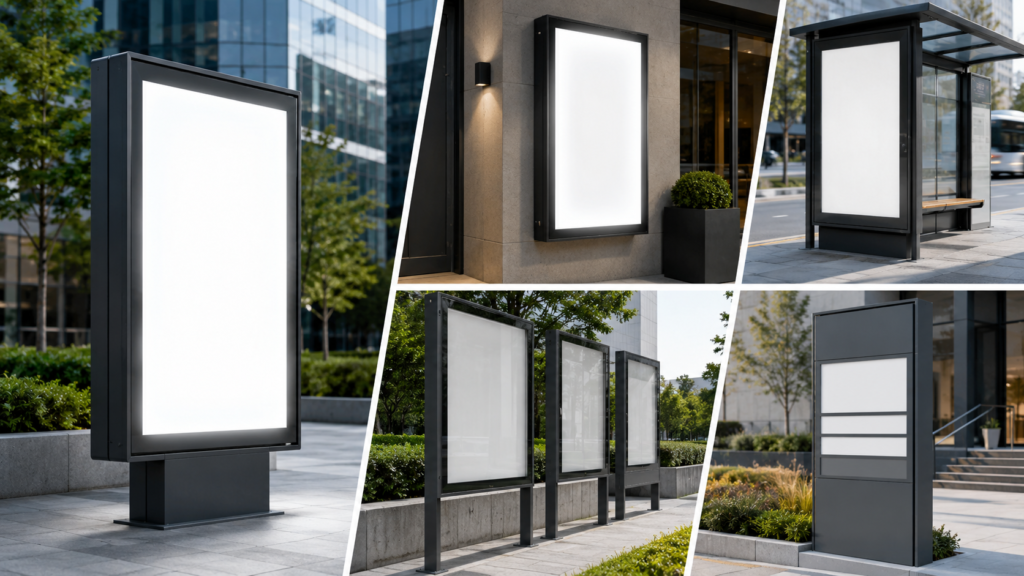
Outdoor advertising display structures appear in commercial plazas, transit areas, pedestrian streets, parks and public-service locations. The visible graphic is only one part of the system. Buyers also need to evaluate the frame, enclosure, foundation, glazing or cover, lighting, electrical access and the method used to replace content.
This guide compares common outdoor display formats and explains what project teams should place in an RFQ. It is intended for contractors, developers, municipal buyers and distributors selecting a customized display rather than a temporary indoor sign.
Article Roadmap for Display Buyers
| Section | Decision | Information to Confirm |
|---|---|---|
| Display format | Freestanding, wall-mounted, shelter-integrated or notice-board style | Site plan, viewing direction and available space |
| Graphic system | Poster, printed panel, illuminated face or information display | Artwork size, replacement method and viewing distance |
| Structure | Frame material, enclosure and base design | Drawings, exposure, wind review and fixing method |
| Lighting | Non-illuminated, internally illuminated or externally lit | Power source, controls and service access |
| Installation | Surface-mounted, embedded or wall-fixed | Foundation, anchors, wall construction and cable route |
| Maintenance | How graphics, lighting and seals will be inspected or replaced | Door operation, locks, drainage and spare parts |
Why the Display Structure Matters
An outdoor display must keep the graphic visible while protecting it from rain, dust, wind and unauthorized access. The structure determines whether a poster remains flat, whether a light source can be serviced and whether the unit can be fixed safely to the site. It also affects how technicians open the display without blocking a walkway or creating loose components.
A design that looks suitable in a rendering can still be difficult to build or maintain. Before approval, the project team should review the overall dimensions, base or wall connections, door swing, drainage, ventilation, glazing, internal supports and access to electrical parts. The final drawing should match the actual site, not only a generic catalog image.
Outdoor Display Structure Comparison
| Structure Type | Typical Location | Main Advantage | Critical Buyer Check |
|---|---|---|---|
| Freestanding light box | Plazas, streets, entrances and transit areas | Independent placement and one- or two-sided visibility | Foundation, wind exposure, power route and service door |
| Wall-mounted frame | Building facades and sheltered entrances | Uses limited ground space | Wall construction, fixings, drainage and access height |
| Notice board | Parks, campuses and community areas | Protected public information and replaceable content | Locking, glazing, hinges and paper or panel format |
| Signage or wayfinding unit | Campuses, commercial areas and public routes | Directs users while supporting a coordinated identity | Message hierarchy, legibility, location and update method |
| Shelter-integrated display | Bus stops and passenger waiting areas | Combines advertising or information with transit infrastructure | Passenger circulation, electrical integration and maintenance separation |
| Non-illuminated poster frame | Lower-power or daylight-focused locations | Simpler electrical scope | Weather protection, graphic retention and viewing orientation |
Freestanding Advertising Light Boxes
When a Freestanding Unit Fits the Site
Freestanding displays work where the project needs an independent visual element away from a building wall. They can face one direction or serve traffic from both sides. A unit placed in an open plaza, however, receives different wind exposure from one positioned beside a building. Location and orientation should therefore be fixed before the supplier completes the base and frame design.
The custom standing advertising light box page provides a product route for this format. Buyers should send the required graphic size, overall height, single- or double-sided layout, lighting need, site photographs and foundation condition when requesting a quotation.
Base, Foundation and Cable Coordination
A freestanding light box transfers its weight and wind forces to the ground. The civil team should review the base plate, anchors and foundation for local conditions. If the display is illuminated, the cable route, isolation point and any concealed conduit need to be coordinated before paving is finished. The supplier drawing should show the interface clearly enough for the site team to prepare it.
Poster Replacement and Door Access
Confirm which face opens, how far the door swings and whether a technician can work without entering a traffic lane. Hinges, locks, gas supports or retainers and the graphic fixing method should suit the intended maintenance process. For double-sided units, ask whether both faces can be serviced independently.
Wall-Mounted Outdoor Display Frames
Check the Wall Before Choosing Fixings
A masonry wall, concrete wall, metal subframe and insulated facade do not accept the same fixings. The project team should identify the supporting construction and keep anchors away from unsuitable cladding-only zones. A large illuminated frame may also need a concealed support or coordinated electrical route.
Control Water at the Top and Back
Rain can enter around the upper edge, penetrations or an uneven wall surface. The design should address flashing or sealing, drainage and the route water takes behind the enclosure. A sealed appearance is not enough if moisture has no planned exit or if technicians cannot inspect the joint later.
Outdoor Notice Boards
Notice boards are intended for information that changes regularly, such as community notices, park instructions or campus announcements. Their success depends less on advertising brightness and more on readable layout, secure access and easy content replacement. The project should define whether notices use paper, magnets, pins or printed panels.
For a product reference, see the custom outdoor notice board page. Confirm the usable internal display area rather than relying only on the external frame dimensions. Locks, hinges, glazing and internal backing should all be included in the quotation.
Outdoor Signage and Wayfinding Systems
Wayfinding products guide people through a site, so message hierarchy and location matter as much as the structure. A sign should be read at the expected approach speed and from the intended direction. Project teams should provide the content schedule, arrows, languages, colors and site plan before finalizing panel sizes.
A coordinated system can include directional signs, identification panels and information boards with shared colors and materials. Review the custom signage systems page and the urban facilities and display collection for related product categories.
Displays Integrated With Bus Shelters
Separate Passenger Use From Maintenance Work
A bus shelter can carry an advertising light box or information panel, but the display should not reduce passenger circulation, seating access or visibility. Service doors and electrical access should be positioned so routine work can be completed with minimal interference to the waiting area.
Coordinate One Structure, Not Two Products
The shelter frame, display enclosure, roof drainage, lighting and foundation interact. Treating the display as a late attachment can create conflicts with posts, benches or glazing. The custom bus shelter page provides a related structural reference for transit projects.
Illuminated vs Non-Illuminated Displays
Define the Required Lighting Result
“LED light box” does not fully define performance. Buyers should state whether the face needs even internal illumination, edge lighting or only a lit surrounding area. Artwork material and panel depth affect the result. Ask the supplier to explain the light source position, access method, power requirement and control strategy for the offered design.
Plan Power and Controls Early
Show the power source, cable entry, isolation and switching method on coordinated drawings. Timers, photocells or other controls may be considered according to the project brief and local electrical design. All electrical selections and installation work should follow the rules that apply at the destination site.
Keep Components Replaceable
Lighting modules, drivers and connections should be accessible without damaging the graphic face or structural finish. Ask which parts are replaceable and whether the service opening provides adequate working space. If spare parts are part of the contract, list them rather than relying on a general after-sales statement.
Single-Sided or Double-Sided Display?
A single-sided display suits a wall, perimeter or location approached mainly from one direction. A double-sided unit can serve pedestrians or vehicles moving in opposite directions. The second face adds graphic and lighting scope and may change enclosure depth, structure, base design and maintenance access.
Use a site plan to mark viewing directions before choosing. A double-sided unit does not add value if one face points toward landscaping, a blank wall or an area where viewers cannot approach. The goal is useful visibility, not simply the largest possible display.
Materials and Surface Treatment
Steel Frames
Steel can provide a rigid frame for substantial freestanding displays. Outdoor performance depends on surface preparation, coating coverage, drainage and treatment around welds, holes and edges. The quotation should identify the proposed protection system for the stated environment.
Aluminum Components
Aluminum can reduce weight and offers useful corrosion behavior, but section sizes, reinforcement and connections still need review. Mixed-metal joints and fasteners should be detailed for outdoor exposure. The material name alone does not establish structural suitability.
Stainless Steel Details
Stainless steel may be used for visible trim, fasteners or frames where its appearance and corrosion behavior match the project. Grade, finish direction, fabrication and cleaning plan influence the final result. Ask the supplier to identify what parts are stainless rather than accepting an unclear “stainless finish” description.
The materials and surface treatment guide provides additional questions for comparing metal finishes.
Glazing, Covers and Graphic Retention
Transparent covers protect printed content and internal components. Buyers should confirm the proposed material, thickness, edge support, opening method and replacement procedure. The design also needs to manage condensation and drainage without allowing loose panels in a public area.
Poster clips, tension systems or internal retainers should hold graphics flat and make replacement practical. Specify the finished artwork dimensions and any border hidden by the frame. A sample or detailed drawing can prevent a mismatch between the printed file and the visible opening.
Installation and Maintenance Checklist
- Confirm the final location, viewing directions and clearance from paths, doors and traffic.
- Provide ground, wall or shelter construction information before fixing details are approved.
- Coordinate foundation, anchor and cable routes with civil and electrical work.
- Check door swing, lock position, technician access and graphic replacement space.
- Review drainage, ventilation, seals and water paths around openings and cable entries.
- List materials, finishes, glazing, lighting components and replaceable parts.
- Confirm packed dimensions, unloading method, assembly sequence and protection of finished surfaces.
- Record the installed configuration and provide maintenance instructions at handover.
What to Include in an RFQ
Send the project location, quantity, site plan, photographs, overall size limits, visible graphic size, single- or double-sided requirement, lighting function, material preference and installation condition. Add the artwork change method, finish colors, branding and required delivery schedule. This information helps suppliers quote the same scope and reduces later assumptions.
For commercial plazas, connect the display request to the wider commercial plaza outdoor facility solution. Coordinating signs, light boxes, benches, bins and planters can produce a more consistent project than purchasing each item without a shared material or color plan.
Frequently Asked Questions
Which outdoor advertising display structure is best for a plaza?
A freestanding light box or coordinated signage unit may suit an open plaza, but the choice depends on viewing direction, available space, foundation and power. Mark the intended locations on a plan before selecting one- or two-sided units.
What should buyers check in a standing light box quotation?
Check the overall and visible graphic sizes, frame material, finish, glazing, lighting, electrical access, door operation, lock, base, anchors, packing and installation scope. Quotations should be compared using the same site and functional assumptions.
Does every outdoor display need internal lighting?
No. A daylight-focused notice or directional sign may not require internal lighting. The project should consider operating hours, surrounding light, power access and maintenance before adding illuminated components.
How are posters replaced in an outdoor light box?
The method depends on the design and may use an opening front or rear service door with internal retainers. Buyers should confirm the access side, door clearance, locking and exact artwork size before production.
Can a display be integrated into a bus shelter?
Yes, if the shelter and display are coordinated as one structure. Passenger space, maintenance access, wiring, drainage, glazing and the foundation should be reviewed together rather than adding the display after the shelter design is complete.
Can Yubang Outdoor customize outdoor display structures?
Yubang Outdoor offers project-based options across standing light boxes, advertising displays, notice boards, signage systems and bus shelters. Available dimensions, materials, lighting and fixing methods must be confirmed for the site. Send drawings, quantities and functional requirements so the team can prepare a configuration without unsupported assumptions.
Conclusion
An outdoor display performs well when its visible message, structure, installation and maintenance plan are developed together. Buyers should select the format from the site and viewing need, then confirm the frame, foundation or wall fixing, cover, lighting, electrical access and content replacement process. For a project discussion, send the site information and required display functions through the Yubang Outdoor contact page.
